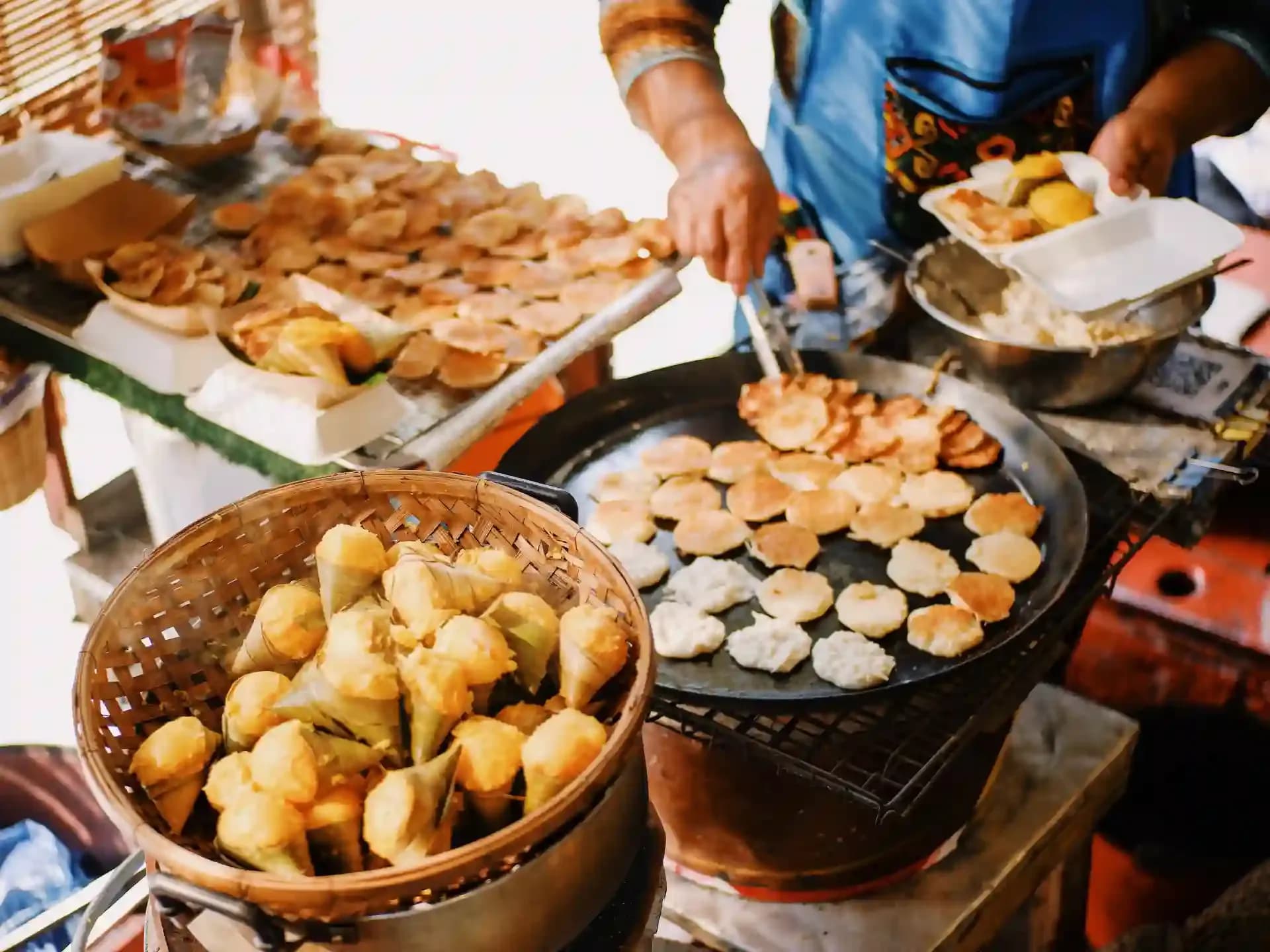
Bangkok, Thailand’s bustling capital, is a vibrant city where the streets are alive with the sizzling sounds and tantalizing aromas of street food. The city’s culinary landscape is legendary, offering an array of dishes that reflect the diverse influences and rich culture of Thailand. In this guide, we’ll explore how to get there, the best time to visit, how long to stay, where to stay, average costs, and what makes each street food location unique.
How to Get There
Bangkok is well-connected to the rest of the world, making it easily accessible for travelers. Suvarnabhumi Airport (BKK) and Don Mueang Airport (DMK) are the two main airports serving the city, with flights arriving from major cities across Asia, Europe, and beyond. From the airport, you can take a taxi, airport rail link, or a shuttle bus to reach the city center.
If you’re already in Thailand, Bangkok is accessible by train, bus, or car from other major cities like Chiang Mai, Phuket, and Pattaya.
The city’s public transportation system, including the BTS Skytrain and MRT subway, makes getting around Bangkok convenient and affordable.
Best Time to Go/Weather
The best time to visit Bangkok is during the cool season, from November to February, when the weather is more comfortable with lower humidity and temperatures ranging from 24°C to 31°C (75°F to 88°F). This period also coincides with some of the city’s most vibrant festivals and events.
The hot season, from March to May, can be quite intense, with temperatures soaring above 35°C (95°F). However, this is a great time to enjoy cold Thai desserts and drinks sold by street vendors.
The rainy season, from June to October, sees frequent showers, but don’t let that deter you. The rain often cools down the city and brings out some of the best street food vendors, offering hot, comforting dishes perfect for rainy days.
How Long to Plan For
To fully savor the street food culture of Bangkok, plan for at least four to five days. This gives you enough time to explore different neighborhoods, from the bustling streets of Yaowarat (Chinatown) to the vibrant night markets of Sukhumvit, and indulge in the variety of dishes Bangkok has to offer.
If you’re a food enthusiast, extending your stay to a week allows you to take part in cooking classes, food tours, and day trips to nearby markets and floating markets, where you can discover even more local delicacies.
Where to Stay
Bangkok offers a wide range of accommodation options to suit every budget, with easy access to the city’s best street food spots:
- Sukhumvit:
Stay in Sukhumvit if you want to be close to modern shopping malls, nightlife, and a variety of street food vendors. The area is known for its night markets and food stalls offering everything from grilled meats to fresh fruit.
- Siam:
This central area is ideal for those who want to stay near major attractions and enjoy street food around Ratchaprasong and Pratunam. Budget-friendly hotels and luxury options are available here.
- Old City (Rattanakosin):
For a more cultural experience, stay in the Old City near the Grand Palace and Khao San Road. You’ll find an abundance of street food vendors selling traditional Thai dishes like pad thai and mango sticky rice.
- Chinatown (Yaowarat):
If you’re a street food lover, Chinatown is a must. Consider staying in this area to be at the heart of Bangkok’s best street food scene, where you can indulge in Chinese-Thai fusion dishes, seafood, and sweets.
Average Price
Bangkok is one of the most affordable cities in the world for street food, making it a paradise for food lovers on a budget:
- Accommodation:
You can find budget accommodations for around THB 500-1,000 (€13-€26) per night, while mid-range hotels range from THB 1,500-3,000 (€39-€78) per night. Luxury hotels can cost upwards of THB 4,000 (€104) per night.
- Street Food:
Street food in Bangkok is incredibly cheap. A meal from a street vendor typically costs between THB 30-100 (€0.80-€2.60). Whether it’s a bowl of noodle soup, a plate of som tam (papaya salad), or a skewer of grilled meat, you can feast like a king for less than THB 200 (€5.20) per day.
- Transportation:
The BTS Skytrain and MRT subway are affordable and convenient, with fares ranging from THB 15-52 (€0.40-€1.40) depending on the distance. Taxis and tuk-tuks are also widely available but make sure to agree on a fare before starting your journey.
What Makes Each Location Unique
- Yaowarat (Chinatown):
Yaowarat is the epicenter of Bangkok’s street food culture. By day, it’s a bustling market district, but by night, the streets come alive with food stalls offering everything from dim sum to roasted chestnuts. Signature dishes include kuay tiew kua gai (stir-fried noodles with chicken) and hoy tod (oyster omelet).
- Sukhumvit Soi 38:
A favorite among locals and tourists alike, Sukhumvit Soi 38 offers a mix of traditional and modern street food. Here you can find khao pad poo (crab fried rice), grilled satay, and delicious Thai desserts like mango sticky rice and coconut ice cream.
- Chatuchak Market:
Known primarily as a weekend market, Chatuchak also boasts an impressive array of street food. From crispy pork belly to refreshing coconut smoothies, this market is a food lover’s paradise. Don’t miss the spicy Thai salads and grilled seafood.
- Silom Road:
Silom is a business district by day, but come evening, it transforms into a street food haven. Must-try dishes include pad see ew (stir-fried noodles with soy sauce), kai jeow (Thai omelet), and moo ping (grilled pork skewers).
- Victory Monument:
This area is famous for boat noodles, a rich and flavorful noodle soup traditionally served in small portions. The streets around Victory Monument are packed with vendors serving various versions of this iconic dish, along with other Thai favorites.
- Ratchawat Market:
Ratchawat Market is a hidden gem, known for its roast duck and beef noodle soup. It’s a more local experience, offering dishes that are both authentic and delicious.
Conclusion
Bangkok’s street food is more than just a meal; it’s a journey through the city’s culture, history, and everyday life. From the bustling markets to the quiet alleys, every dish tells a story, and every bite is an adventure. Whether you’re slurping noodles in Chinatown or savoring grilled skewers in Sukhumvit, the street food of Bangkok is an experience that will stay with you long after your trip ends.